Toronto municipal election: Monday, October 26, 2026Accessibility · Get campaign updates
Home / Safety / SafeCharge
Toronto SafeCharge & Secure Mobility

Making battery charging safer in multi-residential buildings.

The goal is to reduce fire risk without making it harder for residents, delivery workers, seniors or people using mobility devices to travel around the city.

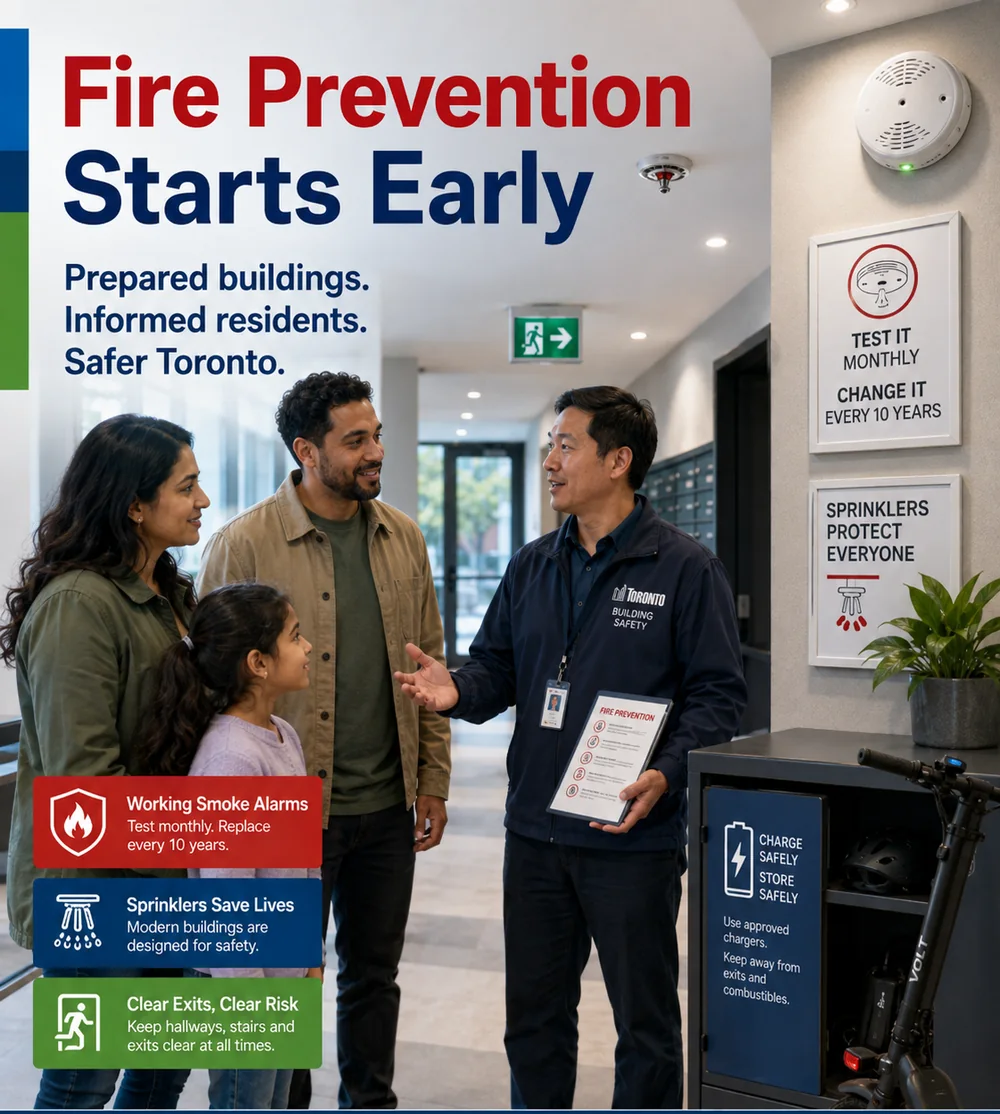
Fire prevention in a Toronto residential building, including working alarms, clear exits and safer battery charging
The clear public commitment

Prevent fires without punishing ordinary ownership.

SafeCharge focuses attention and enforcement where the risk is greatest while making the safe choice practical.

Ordinary ownership remains ordinary

Do not create a licence for a resident using a personal e-bike, e-scooter or mobility device responsibly.

Focus on higher-risk conduct

Address damaged or modified batteries, unsafe charging, blocked exits, repeated high-volume storage and commercial repair or rebuilding activity.

Safe alternatives before penalties

Provide education, safe disposal, voluntary inspections, charging lockers and worker-friendly alternatives before relying on routine penalties.

Strong action for real hazards

Focus enforcement on unsafe commercial operations, repeat violators and imminent dangers—not honest residents correcting a problem.

Why this turns Megacity into Gigacity: Toronto matches prevention, infrastructure and enforcement to the actual risk instead of applying one blunt rule to everyone.

Prevention first

Most incidents can be reduced through safer equipment, storage and awareness.

People are more likely to follow safety rules when they understand the risk and have a workable alternative.

Certified batteries and chargers

Encourage equipment that meets recognized safety standards and discourage unsafe combinations, modifications and improvised repairs.

Safe charging practices

Keep charging away from beds, exits and combustible materials, stop using damaged equipment and follow manufacturer instructions.

Proper storage

Reduce heat, impact, water and obstruction risks while keeping hallways, stairs and escape routes clear.

Early detection

Help residents recognize swelling, damage, overheating, odour, unusual noise and other warning signs before failure.

Education and awareness

Provide multilingual, accessible information for residents, workers, building staff, property owners and emergency responders.

Safe disposal

Create a clear, no-penalty route for damaged or unsafe batteries so people do not keep or hide dangerous equipment.

Safer charging infrastructure

Give residents and workers practical options.

Battery-only charging lockersIndividual access controls, automatic shutoff, temperature monitoring, fault detection, secure construction and user notifications where technically appropriate.
Battery-swapping hubsDesignated locations that reduce residential charging, shorten turnaround for high-use riders and reduce the need for multiple spare batteries.
Dedicated charging roomsFor larger facilities, purpose-designed rooms can combine fire protection, ventilation, access controls, electrical monitoring and emergency procedures.
Safe collection and exchangeDamaged-battery surrender and certified replacement support can remove hazards without destabilizing workers’ livelihoods.

The best solution lets people keep control of their bicycles while making battery charging safer.

Why this turns Megacity into Gigacity: the city changes the conditions creating risk instead of waiting to punish people after something goes wrong.

Campaign concept illustrating coordinated fire, flood and fall prevention
Supporting people

Safety must work for residents and workers.

A plan fails if it creates incentives to hide damaged batteries, makes mobility unaffordable or exposes bicycles to theft.

Support residents

Public education, low-cost inspections, accessibility accommodations, multilingual information and support for residents with limited ability to pay.

Support workers

Charging alternatives near employment areas, replacement programs, safety training and infrastructure that protects both batteries and bicycles.

Protect privacy and fairness

Use information collected for safety only, keep first inspections supportive and reserve strong action for imminent hazards or commercial misconduct.

Work with other governments

Advocate for stronger product certification, import, consumer-protection and market standards beyond municipal authority.

Continuous improvement

Measure what works and adjust openly.

SafeCharge should be reviewed using fire incident data, infrastructure use, resident and worker feedback, building performance and changing technology standards.

1

Prevent

Reduce unsafe charging and remove damaged batteries before a fire starts.

2

Support

Make safer behaviour practical for households, workers and building operators.

3

Learn

Publish results, correct failures and expand only the solutions that improve safety in real life.

The objective is simple: safer buildings, safer transportation and practical solutions that support the people who rely on micromobility every day.
Public evidence

Use verified evidence and update the plan as conditions change.

Toronto Fire Services and other cities have documented growing lithium-ion battery risks and tested safer charging approaches. Final program design should be developed with fire experts, residents, delivery workers, accessibility advocates, building operators, insurers, utilities and other governments.

Build the campaign

Help build safer mobility without punishing the people who rely on it.

A serious citywide campaign needs people, resources and neighbourhood support to reach voters across Toronto.

Order a lawn sign

Show support where you live and help build visible momentum.

Order a sign →
Host or attend an event

Bring neighbours together and help the campaign listen across Toronto.

See events →
Get campaign updates

Receive announcements, policy releases and ways to take action.

Join the list →
Plan Your VoteDonate