 For Mayor of Toronto · 2026
Serious trafficking
Focused investigation, disruption, lawful arrest where the evidence supports it and prosecution through the justice system.
Time to cut the cycle.
Dealers don’t sleep. Neither does our response.
Toronto does not need another horror story. It needs a way out: disrupt serious fentanyl trafficking, recover the person, prevent the next generation from being recruited and restore the neighbourhood after the crisis moves.
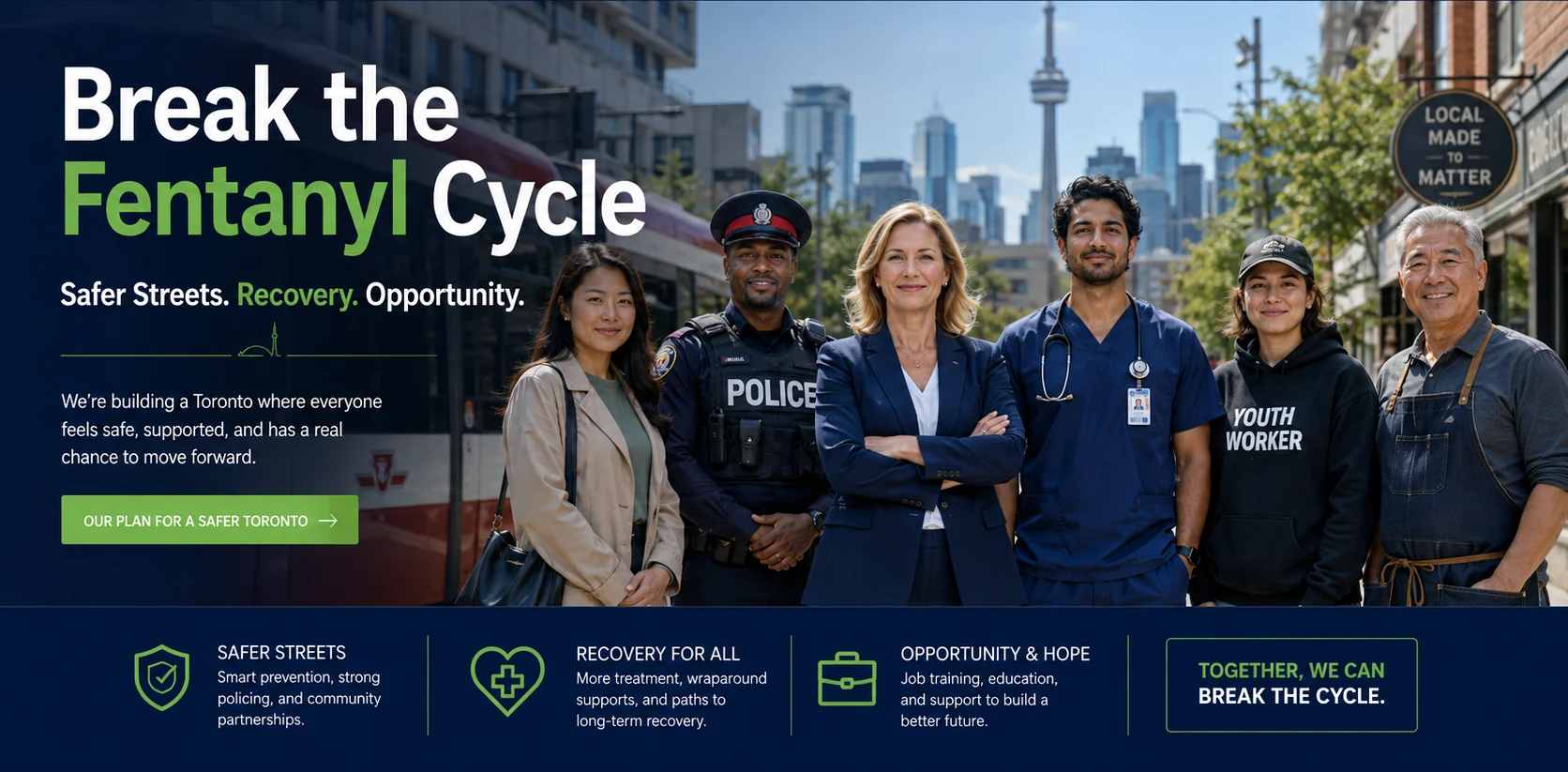
This is not a war on people suffering from addiction. It is a coordinated effort against the cycle that creates more victims.
Focused investigation, disruption, lawful arrest where the evidence supports it and prosecution through the justice system.
Care, treatment, recovery housing, mental-health support, aftercare, skills and a pathway back into community life.
Paid work, mentors, skills, credentials, apprenticeships, education and a legitimate future strong enough to compete with recruitment by criminal networks.
A temporary emergency surge would combine modern policing, AI-assisted analysis, stronger inter-agency coordination, targeted aerial support, robotics and specialized capacity for authorized fentanyl investigations.
We are going to outthink, out-coordinate and outcompute criminal networks. Technology does not replace good police work. It helps experienced people work faster, connect information and focus limited resources.
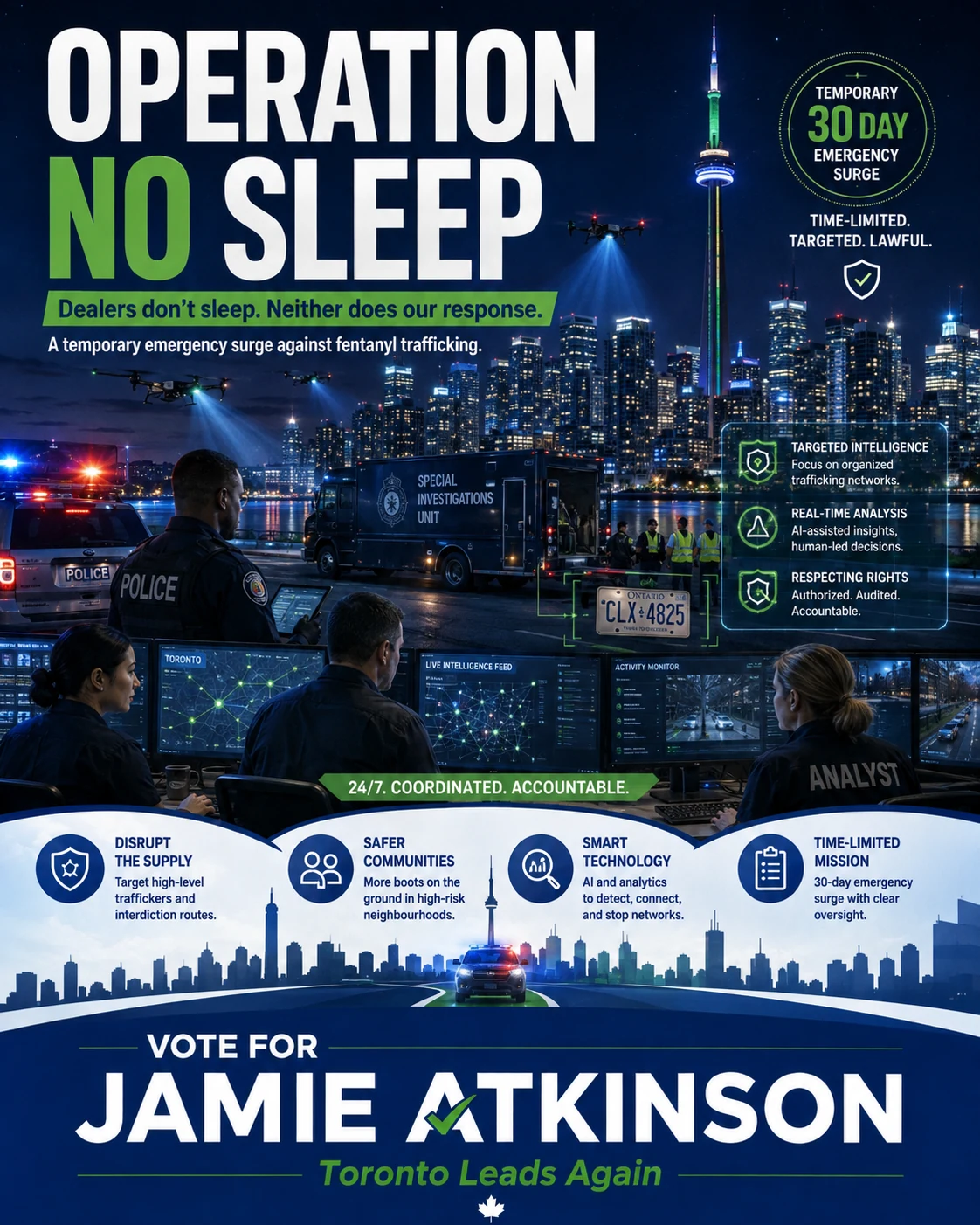
Technology should be used where a lawful public-safety purpose is defined, authority exists and accountable people remain responsible for consequential decisions.
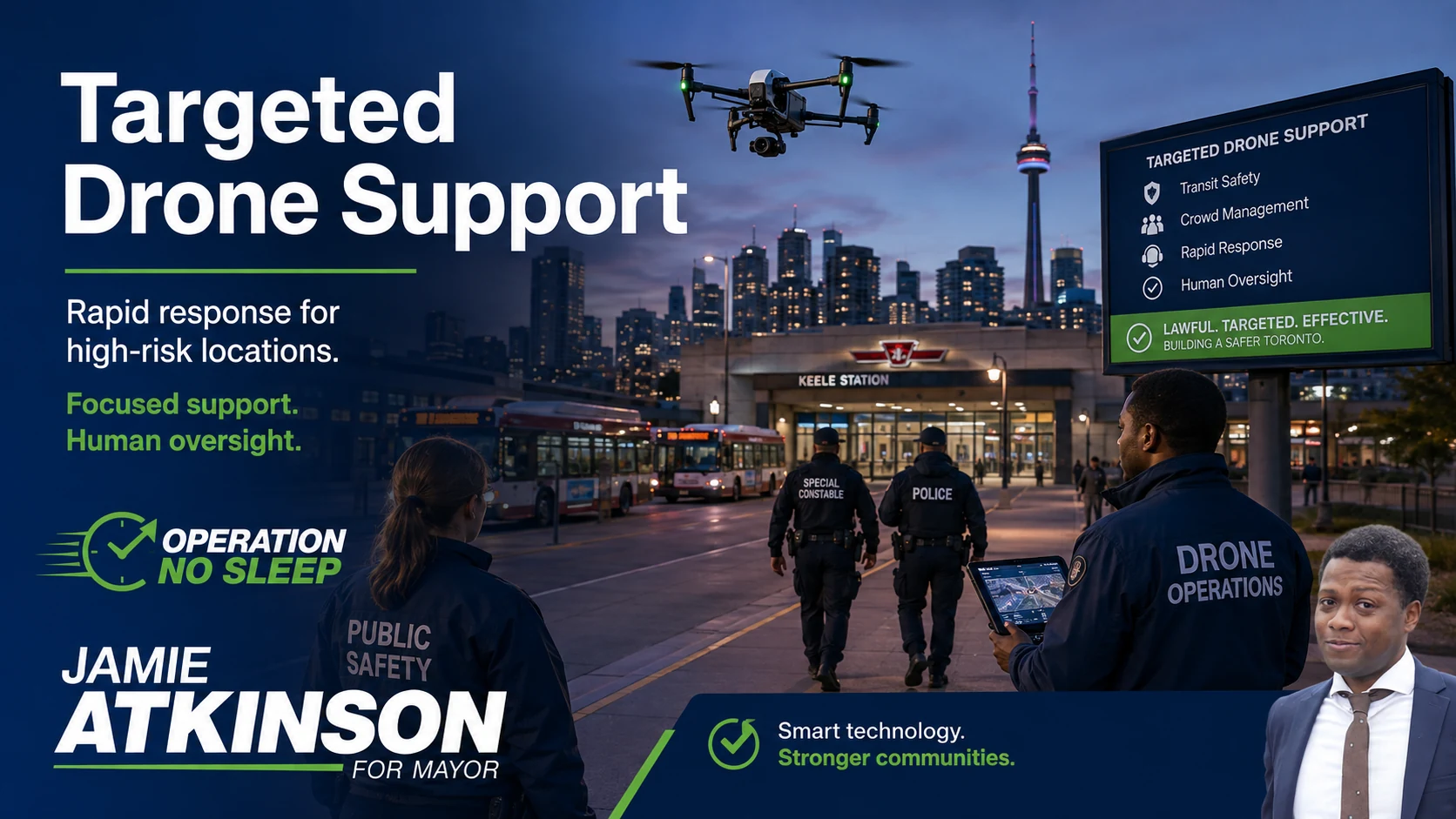
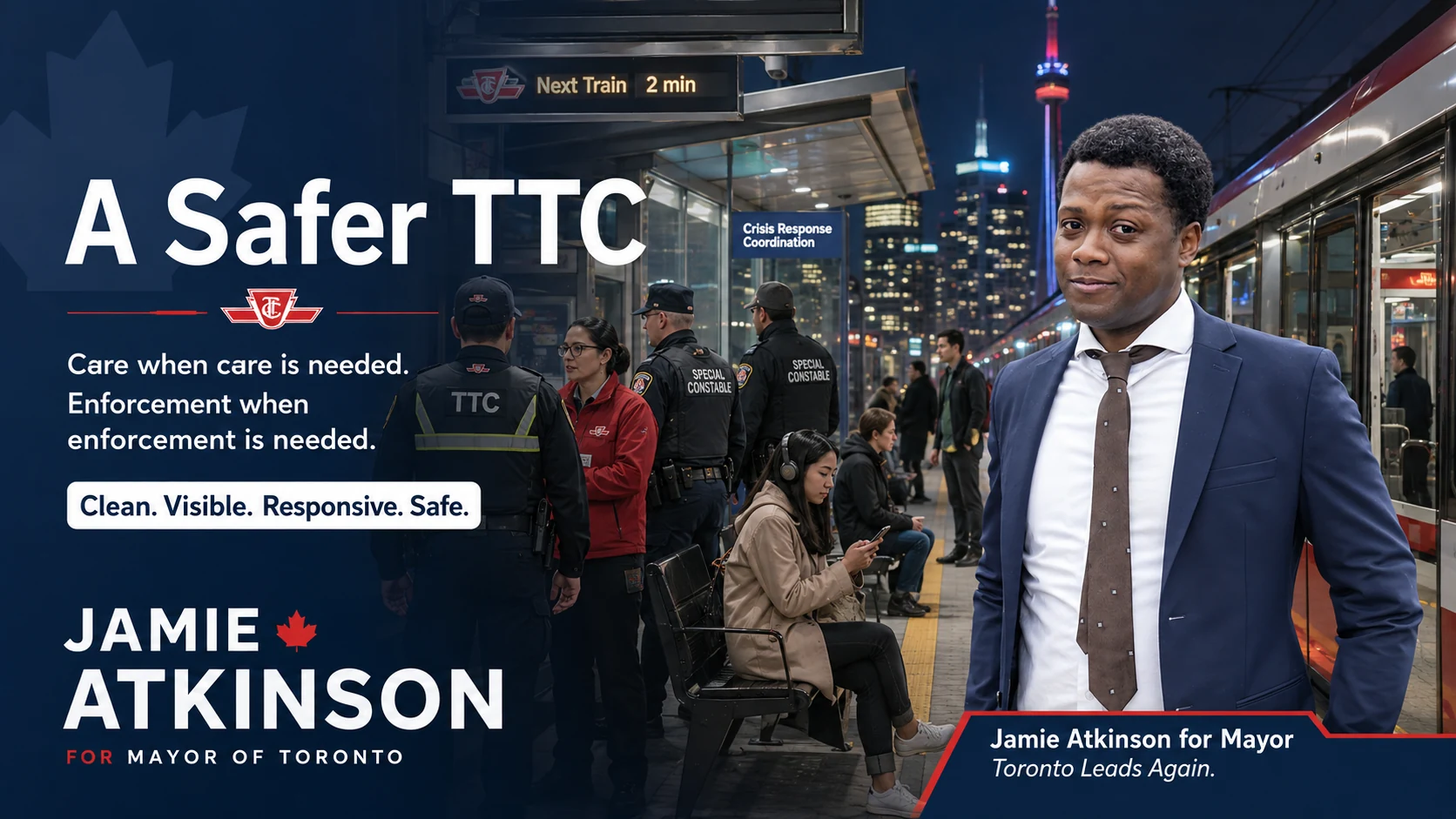
Operating rule: machines process and assist. Police investigate. Courts authorize. Humans decide.
Removing fentanyl from the street is only half the job. When someone reaches for help, Toronto should be capable of reaching back.
Stabilize → Withdrawal Management → Treat → Mental-Health Care → Recovery Housing → Aftercare → Education → Employment
Coordinate emergency care, withdrawal management, addiction treatment and mental-health support with Ontario and healthcare partners.
Link treatment to recovery-oriented housing, aftercare, education, skills and employment instead of returning people to the same crisis.
Technology may help locate capacity and coordinate services. Recovery itself remains a human relationship.
Criminal networks need recruits. Toronto should compete for young people with something real: a paycheque, a mentor, a skill, a credential and a future.
First job → Mentor → Skill → Credential → Apprenticeship or Education → Career
Clear line: police do police work. Young people get real work.
An arrest is not a restored neighbourhood. Moving a problem two blocks away is not success.
Disrupt → Help → Clean → Restore → Invest → Follow Up
Outreach, treatment referrals, recovery navigation and practical support.
Needle and paraphernalia cleanup, sanitation, lighting, maintenance, parks and TTC follow-through.
Community programming, youth employment, support for nearby local businesses—and then come back to measure what changed.
Operation No Sleep would require a defined mandate, fixed authorization periods, privacy and legal review, public reporting, independent oversight and a sunset mechanism.
Queen Street. Yonge Street. Danforth. Scarborough. Etobicoke. North York. Downtown. Every neighbourhood deserves a city government willing to confront a problem instead of learning to live around it.
And every person trapped inside that problem deserves a genuine opportunity to get out.
A serious citywide campaign needs people, resources and neighbourhood support to reach voters across Toronto.
Show support where you live and help build visible momentum.
Order a sign →Residents, community leaders, artists and organizations can add their support.
Submit an endorsement →Bring neighbours together and help the campaign listen across Toronto.
See events →Receive announcements, policy releases and ways to take action.
Join the list →